


Linen Layering Guide
How to Layer Event Linens Like a Professional Designer
How to Create Elegant, Professional Tablescapes with Layered Event Linens
Walk into any beautifully designed wedding, corporate gala, or luxury event, and you’ll notice something immediately: the tables feel complete.
That polished look isn’t achieved with flowers alone. It’s created through thoughtful layering, combining linens, textures, colors, and tabletop elements to build depth and visual interest.
Professional event designers rarely rely on a single tablecloth. Instead, they use complementary layers that guide the eye, highlight focal points, and create a cohesive experience throughout the venue.
Whether you’re planning a wedding, a corporate event, a fundraiser, or a hospitality function, understanding how to layer linens can dramatically elevate the overall design without overwhelming the space.
In this guide, you’ll learn:
- What linen layering is
- Why it matters
- The essential layers of a professionally styled table
- How to combine textures and colors
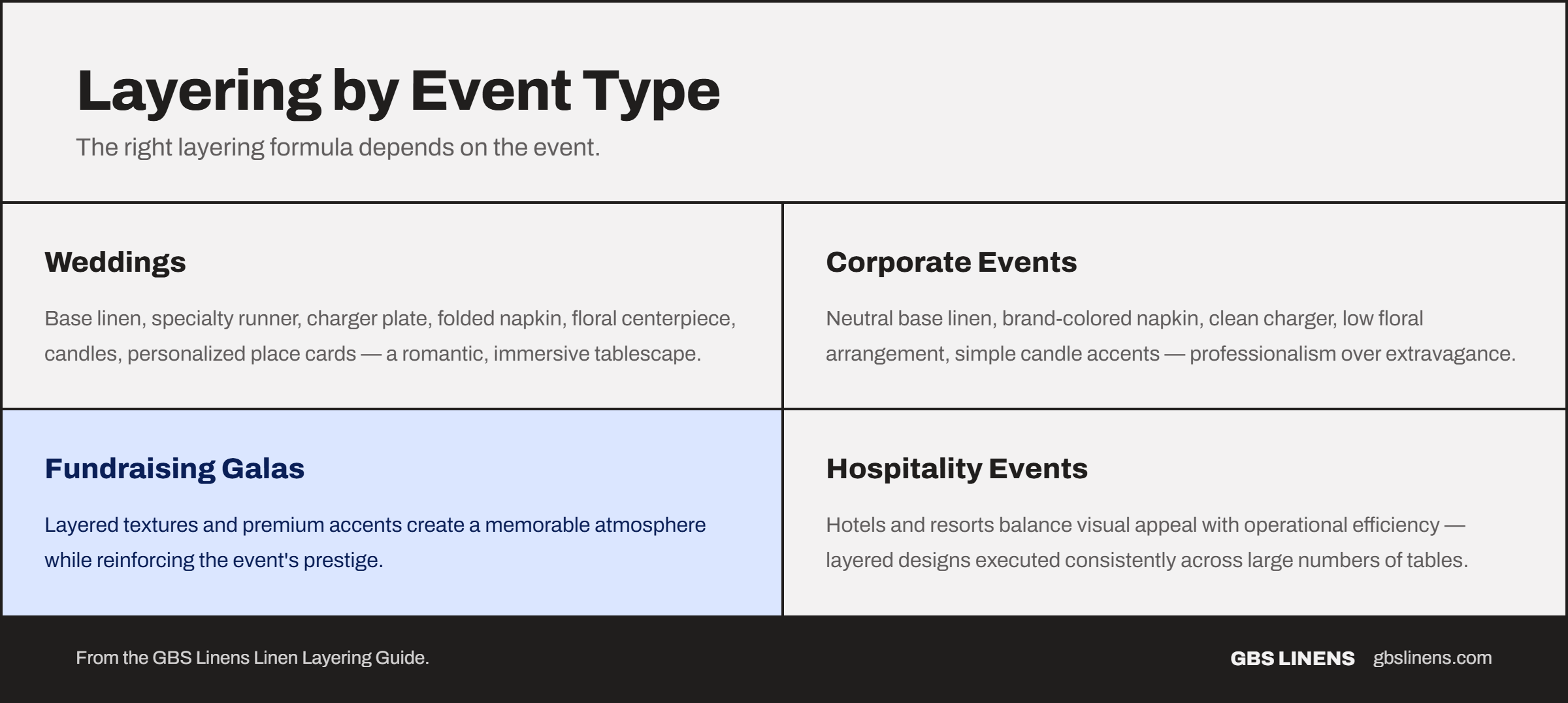
- Layering ideas for different event types
- Common mistakes to avoid
- Practical tips from experienced event professionals
What Is Linen Layering?
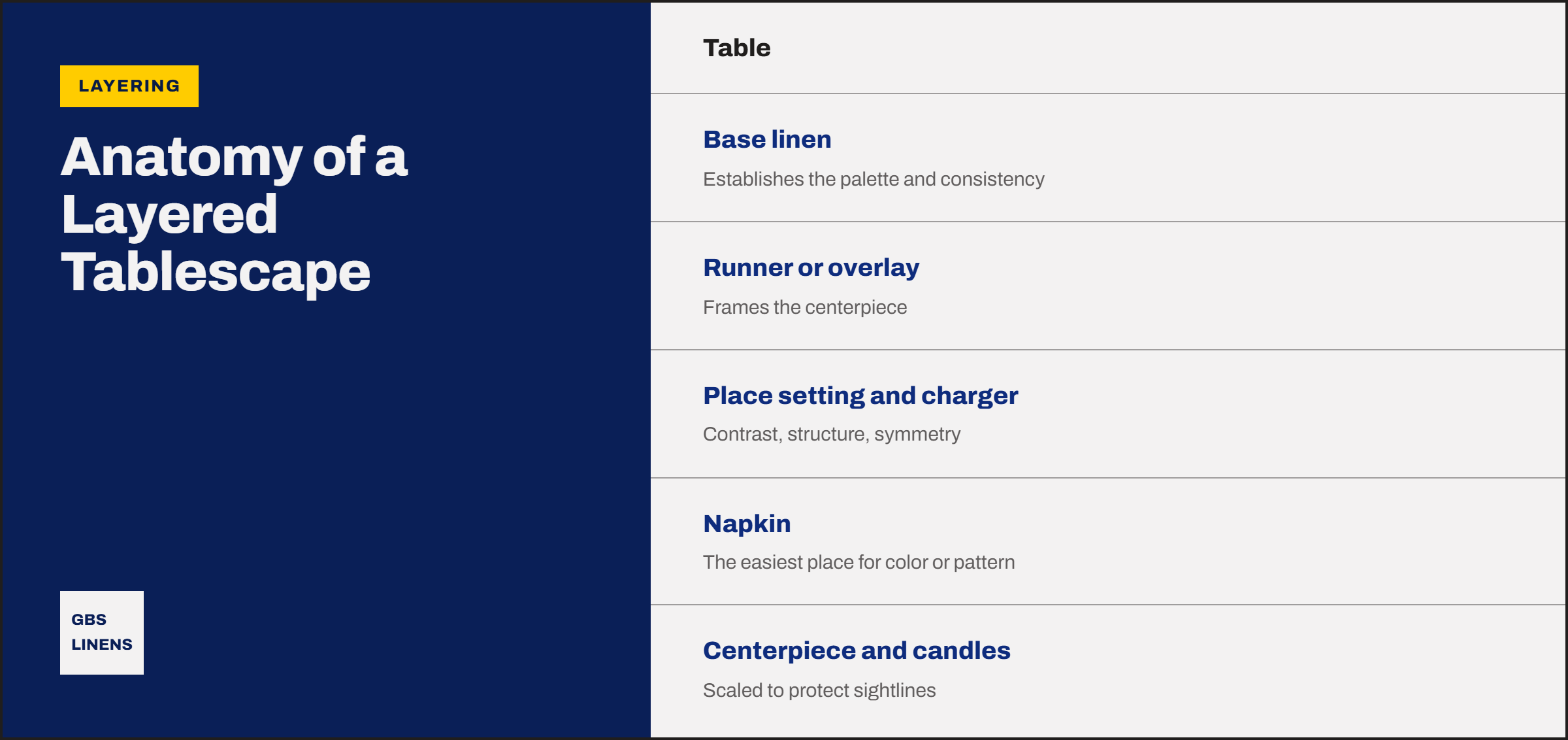
Linen layering is the process of combining multiple design elements to create depth, balance, and visual hierarchy on a table.
Rather than relying on one tablecloth to carry the entire design, layering uses coordinated components that work together.
Typical layers include:
- Base table linen
- Table runner or overlay
- Charger plate
- Place setting
- Napkin
- Centerpiece
- Candles
- Accent décor
Each layer has a purpose, and together they create a refined, intentional presentation.
Why Linen Layering Matters

Layering isn’t about adding more decorations, it’s about creating a balanced design that feels complete.
Benefits include:
- Adds depth and dimension
- Creates visual interest
- Defines focal points
- Enhances photography
- Reinforces event branding
- Helps guide guests through the space
- Elevates the perceived quality of the event
Whether guests realize it or not, layered tablescapes communicate professionalism and attention to detail.
The Foundation: Your Base Linen
Every layered tablescape starts with a strong foundation.
The base linen establishes the event’s primary color palette and creates consistency across the venue.
When selecting a base linen, consider:
- Event style
- Venue architecture
- Lighting
- Guest count
- Overall décor
- Desired atmosphere
For most events, the base linen should complement—not compete with—the surrounding design elements.
Layer Two: Add Depth with Runners or Overlays
Once the base linen is selected, runners or overlays introduce contrast and texture.
These elements help:
- Frame centerpieces
- Draw attention to focal tables
- Differentiate specialty areas
- Add visual rhythm throughout the room
For example:
- Registration tables
- Sweetheart tables
- Dessert displays
- Bars
- VIP seating
These areas often benefit from additional layering because they naturally attract guests’ attention.
Layer Three: Napkins That Complete the Palette
Napkins are one of the easiest ways to introduce color, texture, or pattern without overwhelming the design.
Professional designers often use napkins to:
- Reinforce the event palette
- Highlight seasonal colors
- Introduce subtle contrast
- Coordinate with floral arrangements
- Add softness to structured place settings
Presentation matters, too. A thoughtfully folded napkin can become a design feature in its own right.
Layer Four: Charger Plates and Place Settings
Although not linens, charger plates work closely with layered linens to define each guest’s place setting.
Together they create:
- Contrast
- Structure
- Symmetry
- Balance
The relationship between chargers, dinnerware, and linens often determines whether a tablescape feels cohesive or cluttered.
Layer Five: Centerpieces and Lighting
The final layer extends beyond the table surface.
Centerpieces, candles, and lighting should work with the linens—not compete against them.
Consider:
- Floral scale
- Candle height
- Glassware reflections
- Venue lighting
- Ceiling height
- Sightlines across the room
Successful tablescapes feel balanced from every viewing angle.
Mixing Textures Successfully
Texture is one of the most effective ways to create sophistication.
Instead of combining numerous colors, consider pairing complementary textures.
For example:
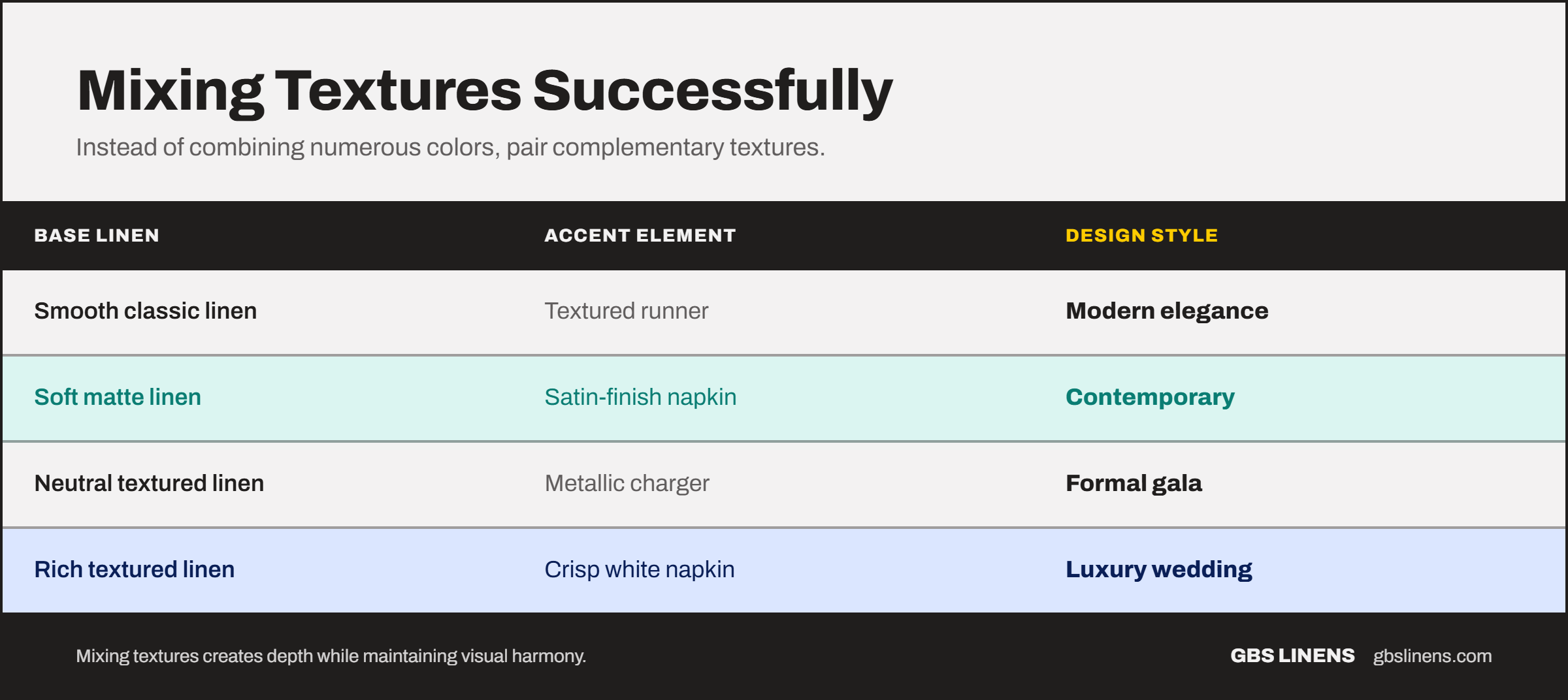
Mixing textures creates depth while maintaining visual harmony.
Layering by Event Type
Common Linen Layering Mistakes
Even experienced planners can overcomplicate a tablescape.
Avoid these common mistakes:
- Mixing too many colors
- Combining competing textures
- Oversized centerpieces that block conversation
- Forgetting the venue’s lighting
- Making every table identical, including focal areas
- Choosing trend-driven combinations that won’t age well
A layered design should feel intentional, not busy.
Professional Tips for Better Tablescapes
Experienced event designers often follow these principles:
✔ Start with one dominant color.
✔ Introduce one or two complementary textures.
✔ Highlight focal tables rather than every table.
✔ Repeat key design elements throughout the venue.
✔ View linen samples under the venue’s lighting.
✔ Consider how the tables will appear in photographs.
✔ Balance elegance with practicality.
These small decisions create a polished experience without unnecessary complexity.
Why Event Professionals Choose GBS Linens
Creating beautiful layered tablescapes begins with quality linens.
GBS Linens provides premium event linen rental for hospitality, event, and rental professionals who need dependable inventory, responsive service, and a wide selection of linen collections suitable for weddings, corporate events, galas, and hospitality functions.
With an extensive range of colors, textures, and premium fabrics, GBS helps clients build layered designs that feel cohesive, refined, and event-ready. Backed by commercial laundry expertise and dependable logistics, every linen arrives prepared to support exceptional event execution.
Frequently Asked Questions
What is linen layering?
Linen layering is the practice of combining multiple tabletop elements—such as base linens, runners, napkins, chargers, and centerpieces—to create depth, balance, and visual interest.
Do I need multiple linen styles?
Not necessarily. Many successful events use one primary linen collection with carefully selected accent pieces to create variety without overwhelming the design.
How many layers should a tablescape have?
Most professional tablescapes include a base linen, accent layer, place setting, centerpiece, and lighting. The exact combination depends on the event style and budget.
Can layering work for corporate events?
Absolutely. Corporate events often benefit from subtle layering that reinforces professionalism while adding visual sophistication.
Should every table be layered the same way?
Guest tables should feel cohesive, but focal areas such as sweetheart tables, registration areas, bars, or dessert displays can receive additional layers to create emphasis.
Final Thoughts
Linen layering is one of the most effective ways to elevate an event without relying on excessive décor. By thoughtfully combining textures, colors, and tabletop elements, you create spaces that feel intentional, welcoming, and memorable.
Whether you’re planning a wedding, designing a corporate gala, or managing events for a hospitality venue, layered linens provide the foundation for tablescapes that leave lasting impressions.
Create Beautiful Tablescapes with GBS Linens
Every memorable event begins with a strong foundation. At GBS Linens, we help hospitality professionals, event planners, venues, caterers, and rental companies create polished, layered event environments with premium linen collections, dependable logistics, and responsive service.
From timeless classics to statement-making textures, our team can help you select linens that complement your vision and simplify execution.
Explore our linen collections or request a customized quote to begin planning your next event.


